


 Cart
Cart
 sales@molnova.com



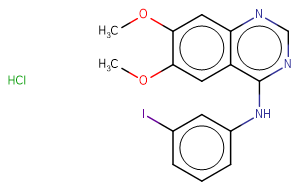
AG-1557 hydrochloride
CAS No. ——
AG-1557 hydrochloride ( —— )
Catalog No. M19479 CAS No. ——
AG-1557 is an inhibitor of the epidermal growth factor receptor (EGFR) tyrosine kinase (pIC50: 8.194).
Purity : >98% (HPLC)
 COA
Datasheet
HNMR
HPLC
MSDS
Handing Instructions
COA
Datasheet
HNMR
HPLC
MSDS
Handing Instructions
| Size | Price / USD | Stock | Quantity |
| 5MG | 49 | Get Quote |


|
| 10MG | 78 | Get Quote |
|
| 25MG | 155 | Get Quote |
|
| 50MG | 286 | Get Quote |
|
| 100MG | Get Quote | Get Quote |
|
| 200MG | Get Quote | Get Quote |
|
| 500MG | Get Quote | Get Quote |
|
| 1G | Get Quote | Get Quote |
|
Biological Information
-
Product NameAG-1557 hydrochloride
-
NoteResearch use only, not for human use.
-
Brief DescriptionAG-1557 is an inhibitor of the epidermal growth factor receptor (EGFR) tyrosine kinase (pIC50: 8.194).
-
DescriptionAG-1557 is an inhibitor of the epidermal growth factor receptor (EGFR) tyrosine kinase (pIC50: 8.194).
-
In Vitro——
-
In Vivo——
-
Synonyms——
-
PathwayAngiogenesis
-
TargetEGFR
-
RecptorhERG|EGFR
-
Research Area——
-
Indication——
Chemical Information
-
CAS Number——
-
Formula Weight443.66
-
Molecular FormulaC16H15ClIN3O2
-
Purity>98% (HPLC)
-
SolubilityDMSO:10 mM
-
SMILESCl.COc1cc2ncnc(Nc3cccc(I)c3)c2cc1OC
-
Chemical Name——
Shipping & Storage Information
-
Storage(-20℃)
-
ShippingWith Ice Pack
-
Stability≥ 2 years
Reference
1.Joshi A. Gadhwal M. and Joshi U.J. Indentification of potential novel EGFR inhibitors using a combination of pharmacophore and docking methods Int. J. Pharm. Pharmaceut. Sci. 7(6) (2015).
molnova catalog



related products
-
FRAX1036
FRAX-1036 is a effective and selective PAK1 inhibitor.
-
EAI001
EAI001 is a potent and selective mutant epidermal growth factor receptor (EGFR) variant inhibitor that inhibits EGFRL858R/T790M with an IC50 value of 24 nM.EAI001 can be used in cancer research.
-
SKLB 1028
SKLB 1028 (Ruserontinib) is a new type of oral multikinase inhibitor of EGFR, FLT3, and Abl. SKLB 1028 shows excellent activity in FLT3-driven AML models and considerable potency in CML models containing Abl mutants.
